
Loading...
Loading...
Loading...
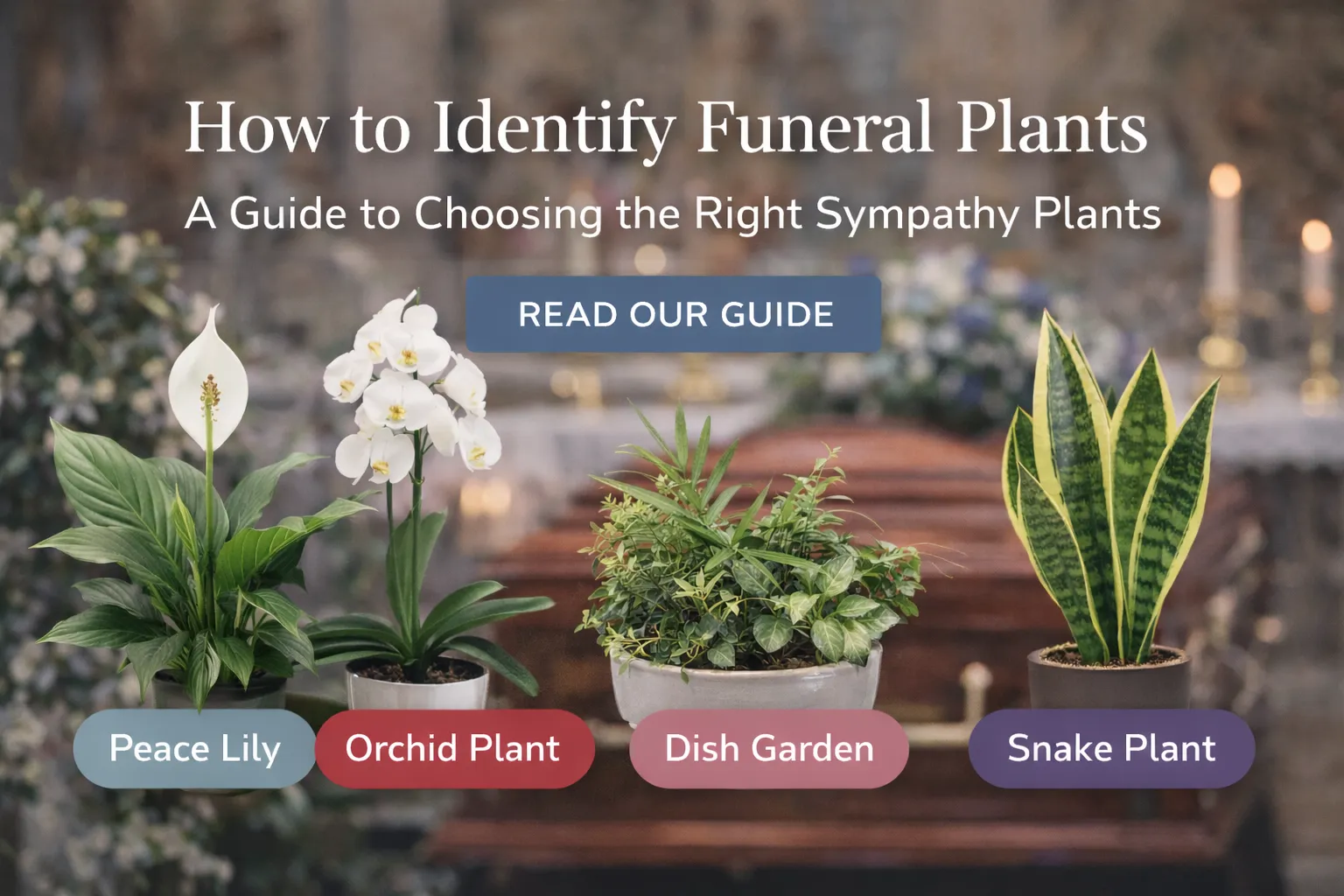
When people think about sympathy gifts, flowers are usually the first option that comes to mind. But funeral plants have become an increasingly meaningful alternative because they last longer, require less replacement, and continue to serve as a living reminder of support and remembrance.
For many families, a plant feels more personal than cut flowers. It can remain in the home for months or even years, offering a quiet sense of continuity after the service. Whether you are choosing a plant for a funeral, sending one to a family’s home, or trying to understand funeral plant identification, knowing the difference between common sympathy plants can help you make a better decision.
You can also browse traditional sympathy arrangements and long-lasting alternatives through Rest in Blooms when comparing options for different funeral and memorial settings.
A funeral plant is not just decorative. It often carries symbolic meaning tied to life, endurance, healing, and peace. While floral arrangements are commonly displayed during the service itself, plants often continue their purpose well after the funeral has ended.
People choose funeral plants because they:
In many modern sympathy situations, funeral plants are sent not only to the service location but directly to the family’s home, where they can provide comfort over time.
Understanding the most common funeral plants is the first step in choosing the right one.
The peace lily is one of the most recognized sympathy plants in the United States. It is especially common in funeral settings because of its clean appearance and calming symbolism.
How to identify a peace lily:
Meaning:
For many people, this is the safest and most traditional funeral plant choice.
A dish garden is not one single plant. It is a grouped arrangement of several small green plants placed together in one container. This is one of the most common answers to searches like how to identify funeral plants because many sympathy gifts arrive as mixed plant containers rather than a single variety.
How to identify a dish garden:
Meaning:
Dish gardens are especially appropriate when you want something long-lasting but neutral.
Orchids are elegant and often chosen when the sender wants to express something refined and enduring.
How to identify an orchid:
Meaning:
Orchids may require more care than some other funeral plants, so they are best when you know the recipient is comfortable caring for them.
Pothos is a common plant used in sympathy plant arrangements and mixed gardens.
How to identify pothos:
Meaning:
Because pothos is easy to care for, it works well in funeral plant arrangements meant for long-term indoor use.
Snake plant is a modern, low-maintenance option that is increasingly used in contemporary sympathy gifting.
How to identify a snake plant:
Meaning:
This can be a thoughtful option for a home delivery, especially in more modern households.
If you are trying to understand funeral plant identification, the easiest way is to focus on leaf shape, plant structure, and container style.
Here are a few quick clues:
This matters because not every funeral plant has the same meaning, lifespan, or care needs. Someone searching how to identify funeral plants is often trying to decide what was received, how to care for it, or whether it was an appropriate sympathy choice.
It is helpful to understand when a plant may be a better option than flowers.
Many families appreciate both. If you are comparing styles, Rest in Blooms sympathy options can help you decide between traditional funeral flowers and long-lasting plant gifts.
Funeral plants can be sent to:
In many cases, sending a plant directly to the family’s home is the most practical option. Unlike large standing sprays, plants are easier to keep, transport, and maintain.
If the service details are unclear or you are ordering from out of town, a direct-to-home option is often the safest approach.
The message should be brief, respectful, and sincere.
Examples include:
The lasting nature of a plant makes it especially fitting for messages centered on memory, peace, and continued support.
Before ordering, ask a few practical questions:
If you are unsure, a peace lily or dish garden is usually the most appropriate choice because both are widely recognized, easy to display, and strongly associated with sympathy gifting.
You can also compare plant-based options with more traditional sympathy arrangements through the Rest in Blooms collection if you want something that matches the tone of the service more closely.
Funeral plants are a thoughtful sympathy choice because they offer more than a momentary display. They provide ongoing comfort, visual calm, and a living reminder of care and remembrance.
They also answer a practical need. Many families appreciate receiving something they can keep after the service, rather than something that fades quickly. And for people searching terms like funeral plant identification or how to identify funeral plants, understanding the common types makes it easier to choose, recognize, and care for the right sympathy plant.
In the end, the best funeral plant is one that feels respectful, lasting, and appropriate for the person and family receiving it.
With seamless coordination and trusted local florists, we ensure every tribute is thoughtfully crafted and delivered with care—right where it’s needed, when it matters most.